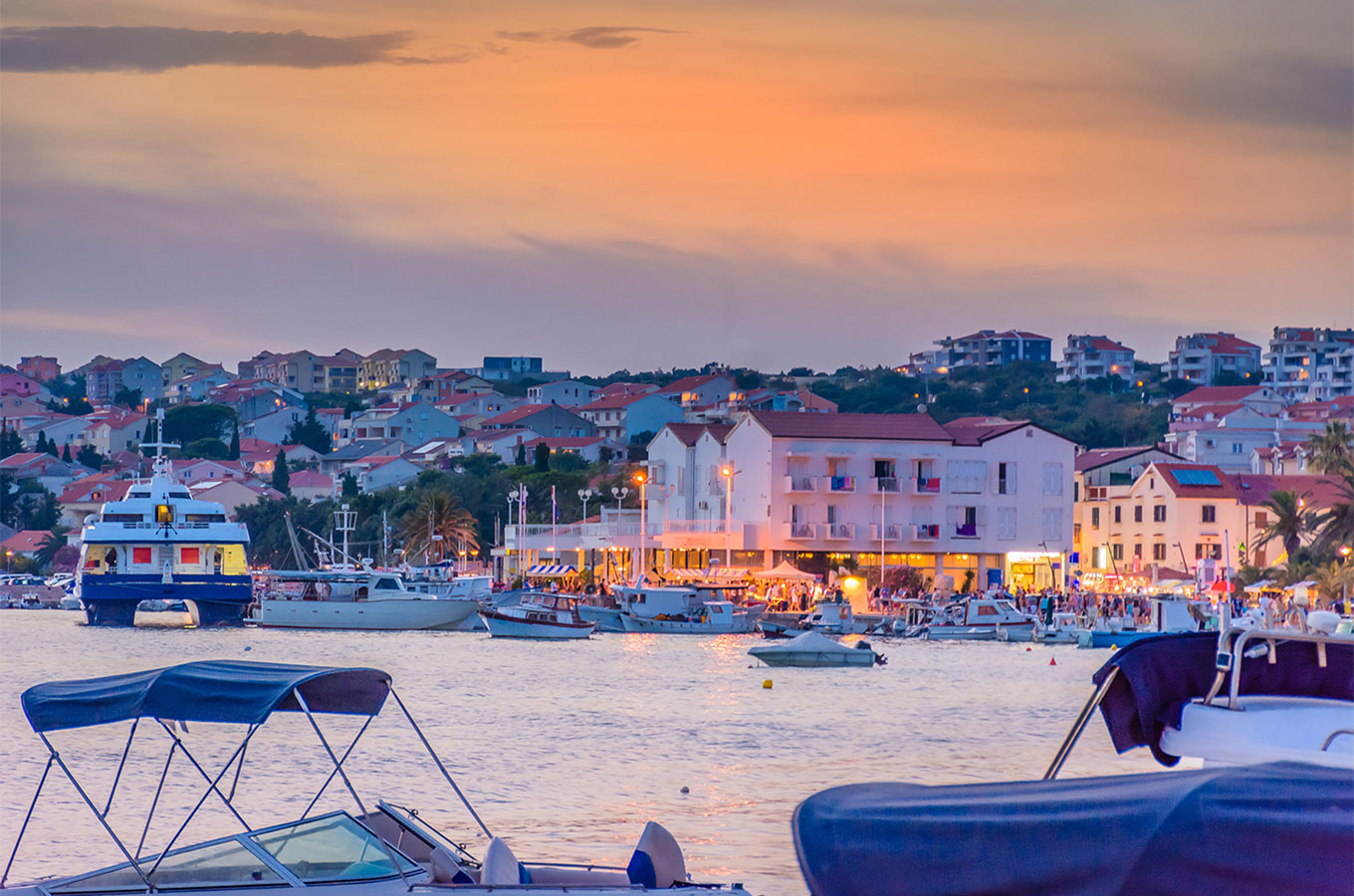
There is a moment on Pag, usually around the time the beach umbrellas start folding up, when the bare white stone of the island turns gold, then pink, then a deep violet. The island that looks like the surface of the moon at noon becomes something softer, and everyone seems to slow down. You do not need a tour or a ticket to enjoy it, just the right spot and a bit of timing. Here are our favourite places to watch the sun go down around Novalja, from an easy stroll along the harbour to a hike up the island’s highest peak.
Novalja waterfront: the easy classic
The simplest sunset on the island is right in town. As the afternoon heat fades, the Riva fills up with families, couples and groups heading out for the night, the café terraces get busy and the boats in the harbour start to glow in the evening light. Grab an ice cream or an aperitif, find a spot along the promenade and watch the sky change colour over the bay. The small pebble beach by the harbour is a good place to sit with your feet in the water while it happens.
It is not the wildest sunset on Pag, but it is the one you can enjoy every single evening without planning anything, and it rolls naturally into dinner. Our guide to restaurants and taverns in Novalja has a few ideas for what comes next.
Lun and the olive gardens: golden hour among ancient trees
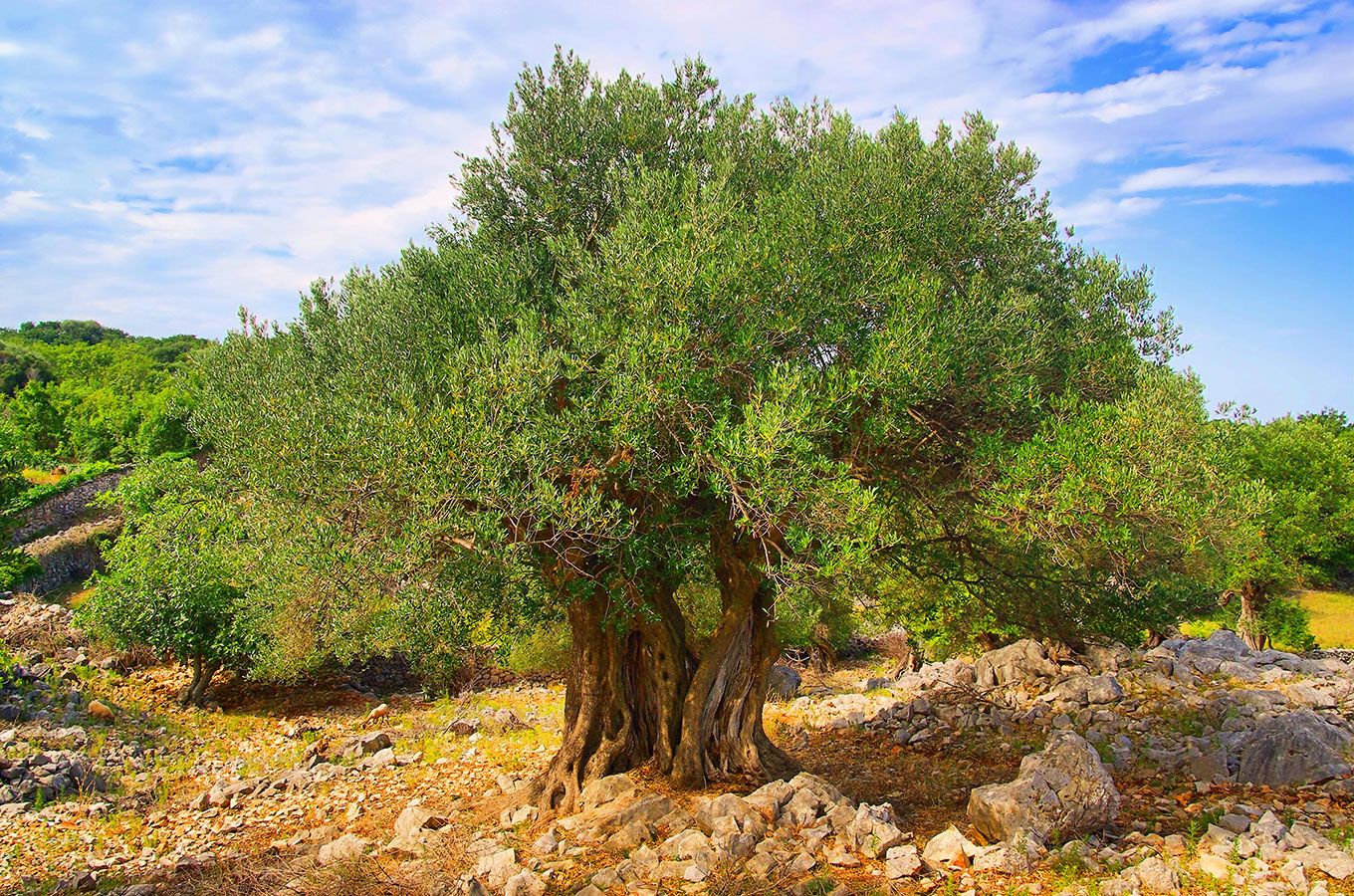
Drive north from Novalja along the narrow Lun peninsula and the landscape changes completely. Instead of bare rock you get the Olive Gardens of Lun, a protected grove of tens of thousands of wild olive trees, some of them estimated to be well over a thousand years old. The twisted trunks and stone walls look their best in low, warm light, so time your walk for the last hour or so before sunset.
Afterwards, carry on down to the little harbour of Tovarnele, about a kilometre below Lun village, where the ferry for Rab comes in. It is a quiet, unhurried place to watch the evening settle over the Kvarner islands. Read more in our guide to the Olive Gardens of Lun.
Mandre: the open-sea sunset
If you want the sun to drop straight into the open Adriatic, head to the west coast. Mandre, about a quarter of an hour’s drive south of Novalja, looks out towards the islands of Silba and Olib and the uninhabited islets of Maun and Škrda. The village has a long seaside promenade, roughly three kilometres of coast with pebble beaches, cafés and konobas, so it is easy to combine an evening swim, a walk and a fish dinner with a front-row view.
Mandre is quieter than Novalja and a lovely place to spend a whole late afternoon. Our guide to Kolan, Mandre and Šimuni covers the rest of this coast.
Sveti Vid: the whole island at your feet
For the most spectacular view on Pag, climb Sveti Vid, the island’s highest point at about 348 metres. The small Church of St Vitus on the summit dates back to the 14th century, and from the top you can see most of the island’s settlements, including Pag town, Kolan, Šimuni and Mandre, plus the neighbouring islands of Rab, Lošinj, Silba and Olib, with the long wall of Velebit across the channel. In the late afternoon the low sun turns the white limestone yellow and orange, which is exactly why photographers love it.
Several marked paths lead up, from Šimuni, Kolan and Dubrava. The popular loop from Šimuni is a moderate walk of roughly eight kilometres and two and a half hours on rocky, completely unshaded paths. Start in the late afternoon rather than the heat of the day, wear proper shoes, bring water, and pack a head torch: if you stay for the sunset itself you will be coming down in the dark. Our guide to hiking on Pag has more trail details.
Gradac viewpoint above Pag town
Driving back from Pag town towards Novalja, look out for the Gradac viewpoint (vidikovac) on the plateau just west of town. It offers one of the best panoramas on the island, over the town and the bay all the way to Velebit on a clear day. Stay a little after sunset: as the light fades and the lights of Pag town come on below, it gets hard to tell where the town ends and the stars begin. The hill nearby was settled in Neolithic times, and in the 19th century people even tried, without much success, to extract gold from its rock. Pair it with a day trip to Pag town.
Plat beach and the moonscape
On the eastern side of the island, facing Velebit, the evening show is about the landscape rather than the sun disappearing into the sea. Around Plat beach near Zubovići, the bare, stony hills catch the last warm light and the island really does look like another planet. Locals like a slow walk from the beach up towards the village as the light fades, with views across the Pag channel. It is a wonderfully peaceful contrast to the bustle of Novalja.
Fortica and the Pag Bridge
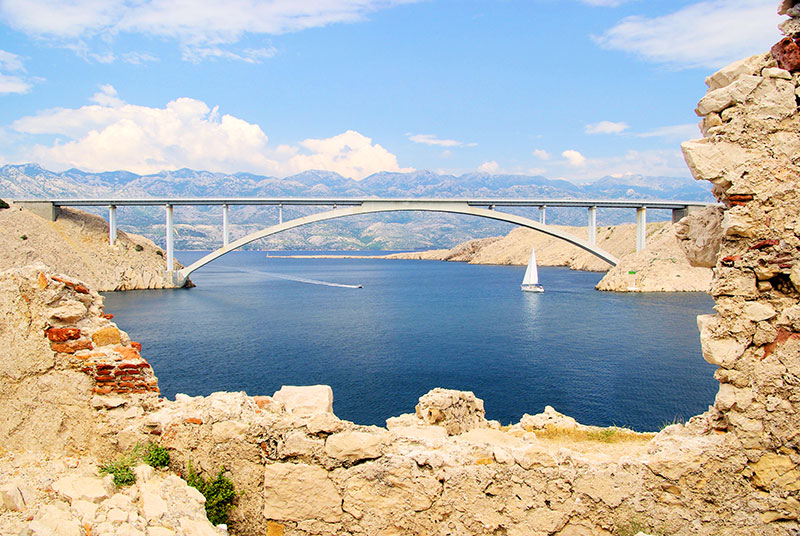
At the southern tip of the island, right beside the Pag Bridge, stand the ruins of Fortica, a 17th-century fortress built to guard the narrow strait and protect merchant ships from pirates. The ruins are freely accessible, there is a small parking area nearby, and the view through the old stone walls to the arch of the bridge and the Velebit mountains beyond is one of the most photographed on Pag. Late in the day the colours over the strait can be magical. It is a long drive from Novalja just for a sunset, but a perfect last stop if you are coming back from Zadar or Nin (see our day trips by car from Novalja).
Tips for the perfect Pag sunset
- Check the sunset time. It changes a lot over the season, so look it up for the day and arrive at least half an hour early. The colours are often best in the ten to twenty minutes after the sun has gone.
- Watch the wind. On days with the bura, the cold northeasterly wind, high and exposed spots like Sveti Vid can be uncomfortable or even unsafe. On those evenings stay low and sheltered.
- Bring a layer. Even in summer, hilltops cool down quickly once the sun goes.
- Leave nothing behind. Pag’s karst is fragile and fires are a real risk in dry months, so no candles or barbecues in the open.
Good to know
Where is the best sunset close to Novalja without a car? The town waterfront. It is walkable from almost anywhere in Novalja and you can go straight on to dinner.
Where can I watch the sun set into the open sea? The west coast, especially Mandre, which looks out towards Silba and Olib.
Is the Sveti Vid hike suitable for children? Older kids who are used to walking can manage it, but the path is rocky and unshaded and the descent after sunset is in the dark. With small children, the waterfront or Lun are easier choices. Our family guide to Novalja has more ideas.
Where should I stay for sunset views? West-facing apartments in Mandre and along the Lun peninsula, or anywhere close to the Novalja waterfront. Browse our picks on where to stay in Novalja.