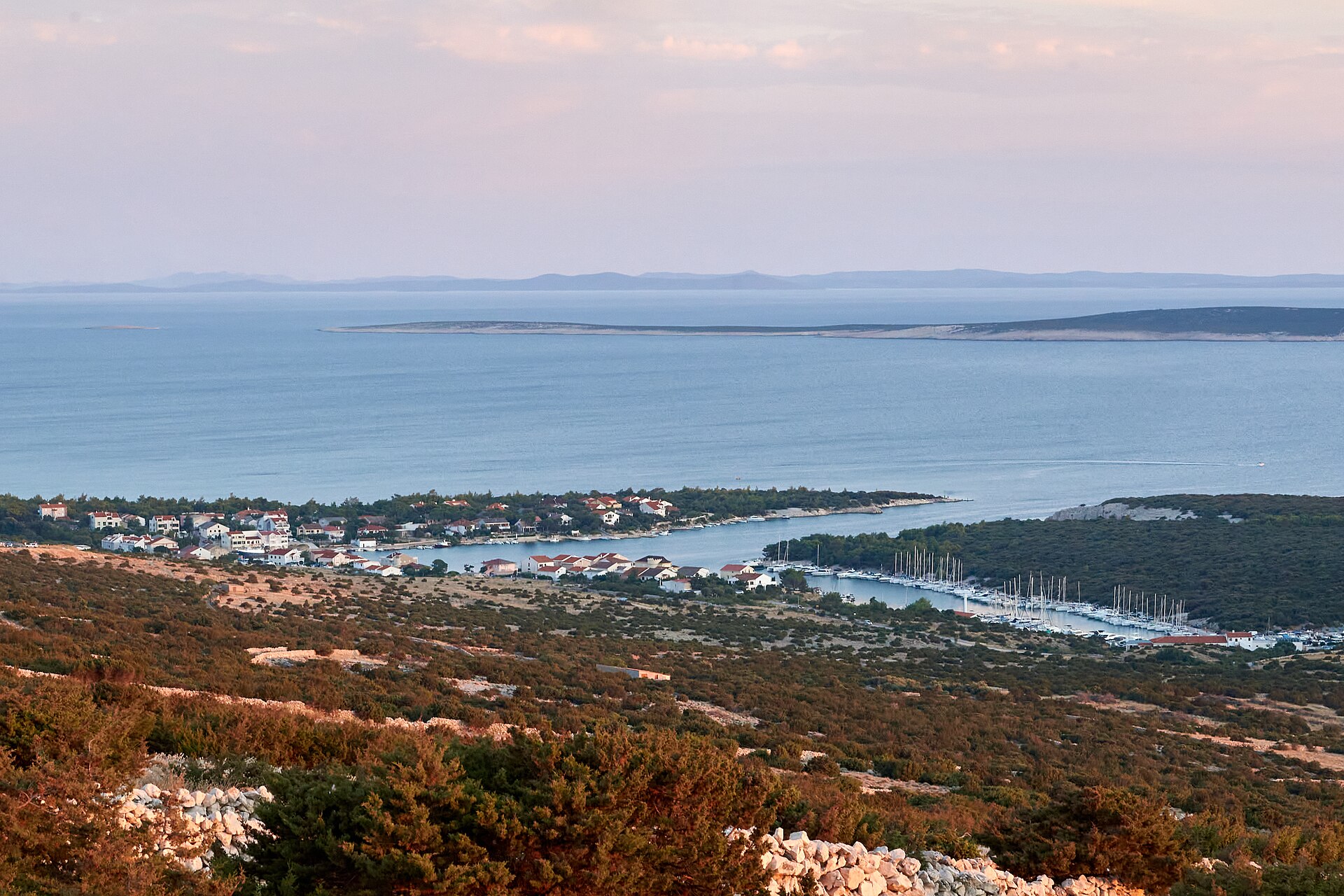
Most people arrive in Novalja, find Zrce, and never turn south. Which is a shame, because fifteen minutes down the road the island changes character completely. The west coast around Kolan, Mandre and Šimuni is where Pag does quiet: cheese dairies you can actually walk into, a wetland full of birds, a marina full of masts, and pebble coves where the loudest sound is a cicada. It is an easy half-day loop from Novalja, and it is the best antidote we know to a heavy night out.
Kolan — the Home of Pag Cheese
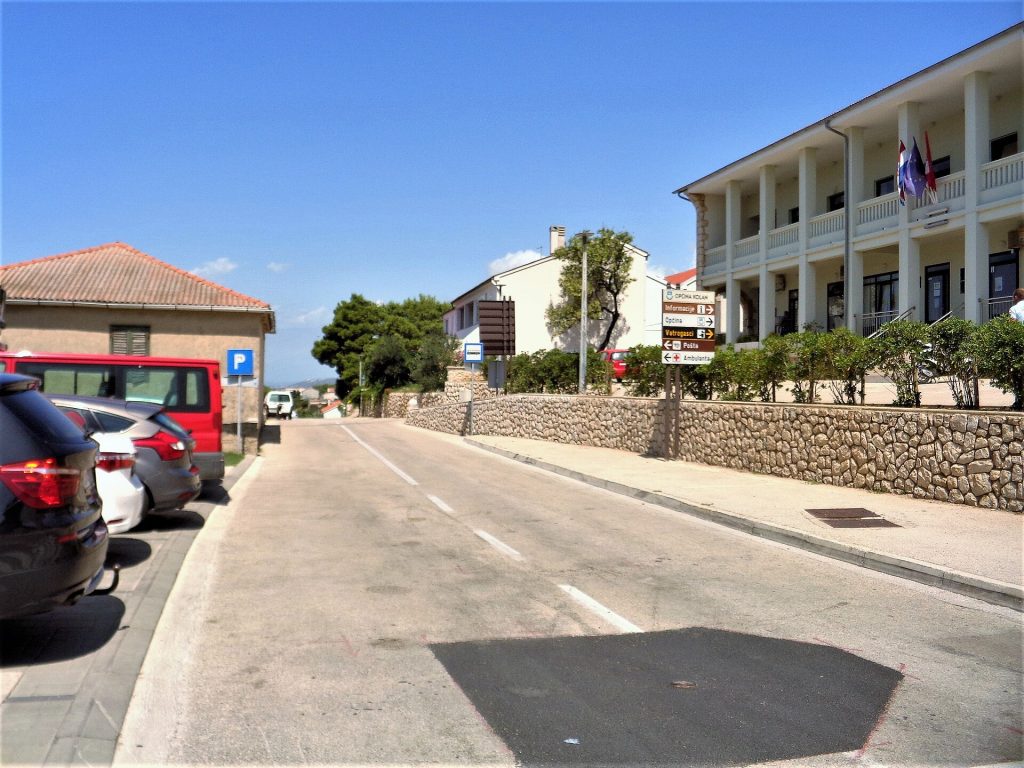
Kolan sits inland, about ten minutes south of Novalja, and it is the reason Pag cheese exists as an industry rather than a farmhouse habit. The island’s best-known dairies are based here — Gligora and MIH among them — and several of them run guided tours and tastings of the production floor. Book ahead in high season; these are working dairies, not museums, and the tour slots fill.
Even if you skip the tour, stop at a dairy shop. Tasting the difference between a young four-month sheep’s cheese and a two-year-old wheel, side by side, tells you more about this island than any guidebook. And if your trip lands at the very end of August, ask locally about the Kolan cheese festival — it is traditionally held on the last Friday of the month and turns the village centre into one long tasting table.
Kolansko Blato — Green Pag, If You Can Believe It
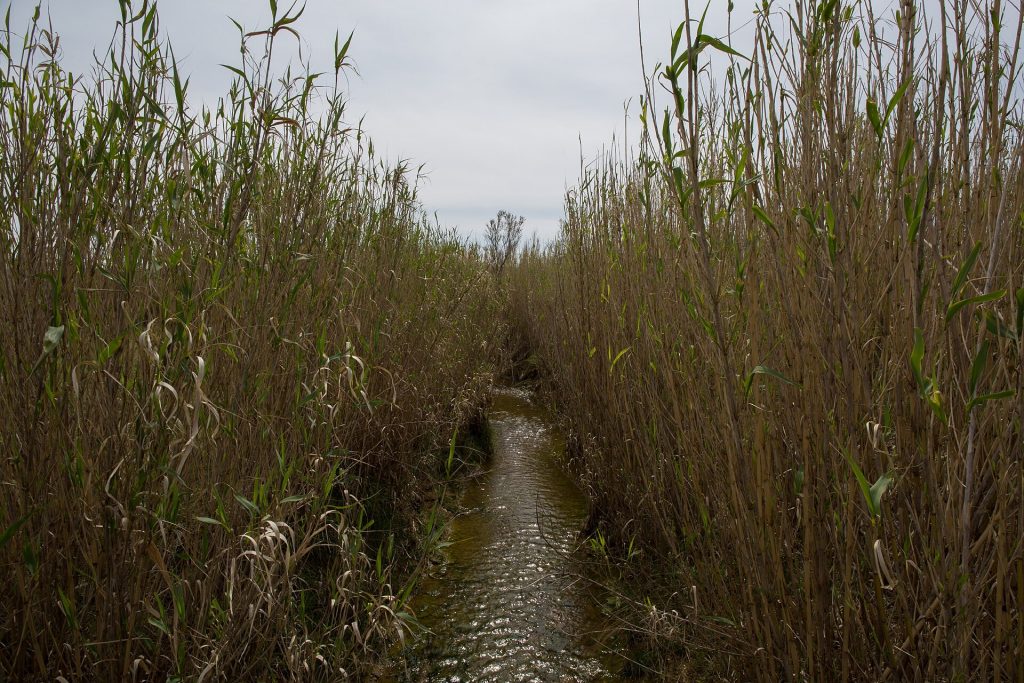
Between Novalja and Kolan there is something the postcards never show you: a proper Mediterranean wetland. Kolansko blato has been a protected ornithological reserve since 1988, and on an island famous for looking like the moon, the sudden wall of reeds and green is genuinely startling.
Over 160 bird species have been recorded here and roughly sixty-odd of them nest in the reserve — marsh harriers, little grebes, reed warblers, stone-curlews. Autumn and spring migration are the busiest times, but there is always something moving. The lake itself is not open for wandering, so plan to follow the dirt tracks that ring it. Bring binoculars, go at dawn or in the last hour before sunset, and wear proper shoes rather than flip-flops.
Mandre — A Village Built Around One Small Bay
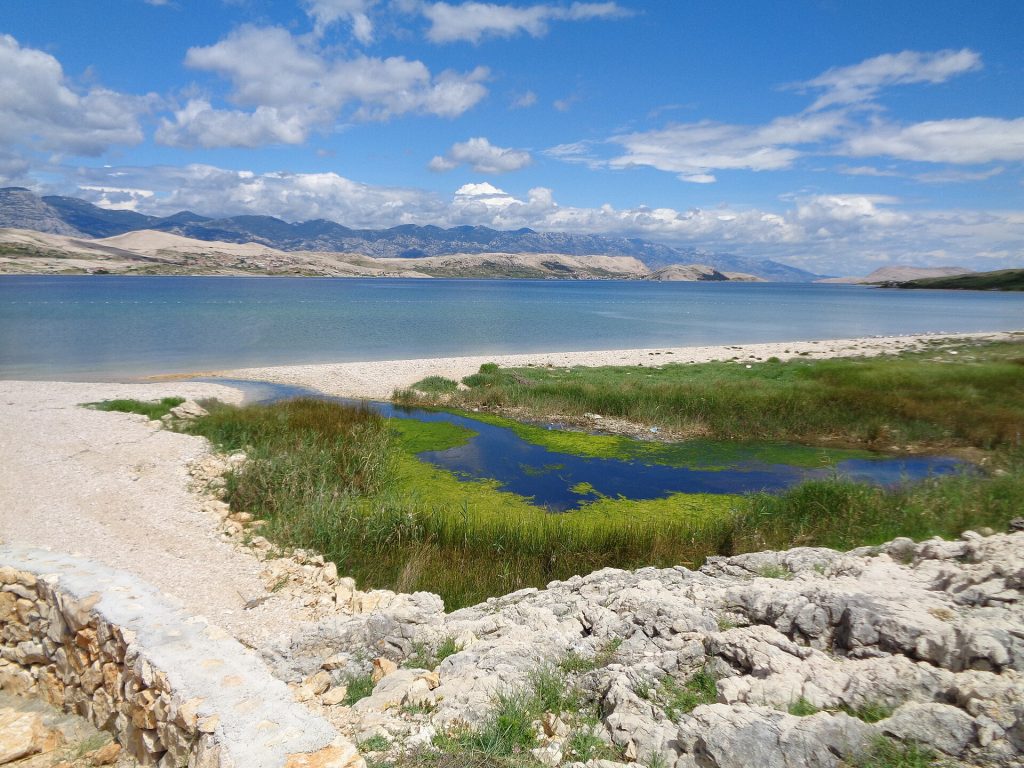
Mandre lies about ten kilometres from Novalja on the sheltered south-western coast, looking across at the low green island of Maun. It grew out of shepherds’ summer huts and it still feels like a village rather than a resort: a strip of houses along the water, a few konobas, and the white bell tower of the church of Our Lady of the Snows marking the skyline.
The centrepiece is Mala Mandra, the little beach right in the middle of the village. It sits in a small bay that is closed to motorboats and jet skis, which makes it unusually calm, and it has carried Blue Flag status for its water quality since 2006. If you are travelling with small children and Zrce sounds like a bad idea, this is your beach.
Away from the centre, the coast either side of Mandre breaks into small pebble and rock coves backed by pine and low scrub. Cista beach, a short drive along the Kolan coastline, is the sort of place where you park, walk five minutes, and have a slab of white pebble and impossibly clear shallow water largely to yourself.
Šimuni — Masts, Pines and a Working Harbour
Four kilometres further down the coast from Mandre, Šimuni is where the sailing crowd stops. The ACI marina here is effectively the last marina of the Kvarner islands and the northern doorway into Dalmatia, so on a summer evening the pontoons are a slow parade of charter boats coming in off the channel.
You do not need a boat to enjoy it. Walk out along the marina in the late afternoon, then double back to Porat, the small old harbour tucked among pines and Mediterranean scrub — it is one of the prettiest ten-minute walks on this side of the island. Šimuni is also home to one of Croatia’s big pine-shaded campsites, so the village has more cafes, bakeries and dive-and-watersports options than its size suggests.
How to Do the Loop
You want a car, a scooter or a decent bike. The whole run — Novalja to Kolan to Mandre to Šimuni — is barely twenty kilometres one way on good road, and you can comfortably do it in half a day. Our suggested order: leave Novalja mid-morning, do the dairy in Kolan first while the tasting rooms are fresh, swim and have lunch at Mandre, then finish with a late afternoon in Šimuni as the boats come in.
Two practical notes. Shade is limited everywhere on Pag, so take water and a hat even for short walks — and especially at the reserve. And the bura, the cold northeast wind, can make the exposed stretches surprisingly rough even in summer; if it is blowing hard, the sheltered bays at Mandre and Šimuni are exactly where you want to be.
Zrce will still be there tomorrow. Give the west coast one morning and you will understand why people who have been coming to Pag for thirty years keep going back to the same small bay.